

Planning a game night? Let’s make sure everyone is on the same page with their expectations of “what is fun” and how to get on with each other! Attending a game night? Not sure what the “social contract” is? Let’s discuss how to maximise everyone’s fun when we play games round the table.
Written by Chris Lowry
“Urgh, this seems pretty complicated…”

There’s no getting around it—everyone who’s playing a board game needs to understand the rules.
They can seem initially confusing or difficult, but the reality is that in most games rules actually disappear into your subconscious after the first few rounds. Don’t be intimidated, just accept there’s a speed bump to get past before the good stuff begins.
Unfortunately, we’ve all had the experience of someone coming along to a game night who doesn’t quite understand the necessity of committing to 15 minutes of learning. They’ll say “wow, why so complicated?” repeatedly during the rules teach, they’ll sigh, they won’t pay attention… and then they need everything explaining again. Don’t be that person! Here’s how to learn those rules best:
1. Watch a rules explanation on YouTube before you arrive. Almost every game has one. Watch It Played, for example, is an entire channel of cheerful Canadians who will explain the broad sweep of how to play many games. You’ll notice that often these video can actually be 30 minutes or longer; that’s a time investment it’s worth making in order to really enjoy yourself later.
2. Download the rulebook on your phone. Again, nearly every manufacturer makes these available for free, and it’ll provide you with a quick reference that’s searchable too. Plus it’ll save asking the organiser to explain simple rules or concepts over-and-over again.
3. Finally, LISTEN to “the rules teach” when your friend explains the game. Don’t moan, don’t start other conversations; simply try to focus, and pick up the details that you’ll need in order to play. If you don’t understand a concept, ask a question; others may also be struggling too, and it keeps everyone engaged.
“How do I win?”
There’s nothing worse than sitting through three hours of a tabletop experience and then realising you’ve got no strategy to win. I mean, there are lots of worse things in the world, like olives, but I’ve been given a narrower remit for this article…
It’s important you know how to win, otherwise, it’s not really a competition for anyone. I once played Ticket to Ride with someone who literally didn’t realise the purpose of the game was to complete routes. Frustrating for them, yes, but for me too—my victory was meaningless if it was against an opponent who didn’t know how to play!
At the end of the rules explanation, pipe up if you don’t know these three elements:
1. “What is the goal here?” You aren’t looking for every nuanced idea, just a broad strategy. So, for Ticket to Ride “You want to collect the most points by building train lines and completing route cards. If you have long route cards you’ll probably win… unless you don’t complete them, because you’ll get penalised instead of rewarded.”
2. “What’s a good first move?” Strategy in games often evolved through the rounds, but in Catan, for example, if you don’t pick good starting locations then your game is almost over before it began.
3. “How much player interaction is there?” Some games are fiercely interactive, with players directly blocking or attacking each other. Others are almost solo puzzles that you happen to play adjacent to one another. In Camel Up, placing guesses for the overall winner and losers is rewarded by how quickly you do it. If all your opponents all begin to place down their guesses in early turns, they may block you from scoring highly later on.
“I’m going to destroy all of you!”

Friendly competition is a lot of fun; it can transform an experience from tedious apathy into highly engaged experience for all. The pitfall, however, is caring too much. I once played with someone who was angry with us all, in real life, for an entire week after they lost. Admittedly, it was an eighteen hour game of Twilight Imperium, but still: Games are not worth real life upset!
How to be the right amount of competitive:
1. Understand the purpose of the session. You are not here to win at all costs; you are here to have fun. If you lose, be a good loser, not a bitter one; you got to play a game with your friends, so you’re still a winner really!
2. Read the room. A bit of friendly trash-talk can be entertaining; aggressively calling people out, less so.
3. Explain your intentions. Especially for neurodivergent people, guessing the motivations of others can be difficult. Start the evening by saying “I’m going to be pretending to really care about the winner tonight, but actually I’m just here to have fun. Let me know if I’m sounding too competitive and I’ll tone it down”.
“I’ll take this card… just so that you can’t have it!”
Even with the above taken into account, there are some games that are built for competition, and there are some that can be played competitively regardless. The level of this will be down to your game group.
One game of Risk I played was so filled with broken promises, lies and betrayals that we all became unable to trust anything that anybody said—and we loved it! Yet, on a different occasion, one of my friends was deeply hurt by another attacking them after they had promised not to. The answer to this isn’t a one-size-fits-all approach; the solution is communication.
Before you start, simply ask this: “How competitive are people feeling? Are we trying to win on pure strategy, or should we be going to be going out of our way to block other people’s points to boost our own score?” The room will make it clear how aggressive they want to go, and if there isn’t agreement, now’s the time to find it—before the dice begin to roll!
“These are my crisps, no one else can have them”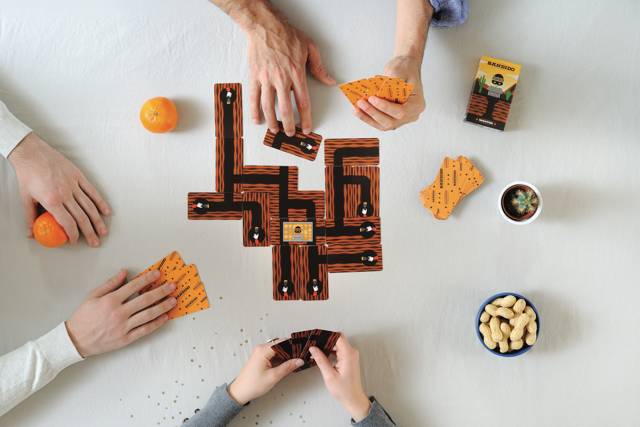
My final point is less about games, more about social niceties; remember you are in someone’s home. My friend who spilled an entire pint of hot orange squash (like, who even drinks that?) over my out-of-print copy of Lords of Vegas is still a good friend of mine, but do I wish her drink had gone on a side table? Yes!
1. Your host agreed to play a game, not feed the five thousand. Bring food to share, bring drinks, don’t hog all the popcorn.
2. Ask about foodstuffs and fun. I personally don’t mind if you get the odd crumb on the table; my pal Josh would prefer you washed your sticky Doritos fingers before ruining his cards. Respect their preferences.
3. Shower and deodorise before you turn up. You might not need that reminder, but remember that no one is going to be unhappy if you smell good!
That’s enough to give you a baseline for fun and success—now go out and lose some games, laugh at yourself and then let’s play again!
Chris also wrote about hosting the best board game night – check that out too!