
The worker placement mechanic has been popular since its first appearance sometime around the turn of the century. Fans of eurogames, in particular, are drawn to the leisurely process of plopping down a meeple for exclusive access to an action. In most cases, this involves collecting exciting things such as wood and grain, or partaking in white-knuckle activities like draining a peat bog, but there are now many examples demonstrating how the mechanic has migrated to less bucolic themes too.
Written by Chad Wilkinson

Whilst not strictly the first, Uwe Rosenberg’s farming classic set the blueprint for worker-placement games. Its theme of 17th-century farming might seem cute and wholesome (if we ignore the historical context of harsh living conditions and poverty, alongside the unsubtle subtext of starvation), but this is a strategically dense and cutthroat game, where mistakes can be costly. Still, Agricola remains popular for those wanting a fiercely competitive game, alongside the almost meditative tactile experience of arranging and nurturing their own farm. Furthermore, Agricola gets bonus points for popularising the use of adorable little animal meeples; watching those little wooden sheep, cows, and pigs multiply never gets old.

If soulless cubes and sheep meeples aren’t cute enough for you, Everdell has you covered. This gorgeous game of anthropomorphic woodland wonder has remained hugely popular since its release in 2018, with several expansions and standalone spin-offs appearing since then. As leaders of their preferred critters, players will grow their woodland city, using workers to gather resources and build up a tableau of (hopefully) synergistic cards. Everdell is ideal for welcoming newcomers to the hobby, thanks to its accessibility and stunning art and components. I mean, who wouldn’t be drawn to a game with a three-dimensional tree populated with pebbles, berries, and talking turtles?

One of the good things about the worker-placement genre is how adaptable it is in terms of complexity. The idea in itself is so simple, yet individual games can range from brain-meltingly obtuse to something the whole family can play. Stone Age is one of the best examples of the latter, keeping things simple without dulling its competitive flintknapped edge. Best demonstrating this is the board and its refreshing readability. Michael Menzel’s ever-fabulous art effortlessly delineates how and where players’ prehistoric tribe-members will gather the wood, rock, gold, and clay required to craft the tools and huts needed for victory. There’s a logic to its aesthetic that just clicks, and that’s a powerful thing in such a visual medium.

Uwe Rosenberg always manages to squeeze something novel into his games. This time around, it’s Vikings playing Tetris, sort of. After the success of Patchwork and his subsequent ‘tetromino’ phase, Rosenberg sought to suffuse these ideas within the worker-placement framework, and the result was the fantastic and utterly ginormous A Feast for Odin. In the game, players will explore, pillage, hunt, and produce – choosing from an astounding sixty-one action spots – whilst being mindful of exactly where to place their tetromino goods tiles in order to maximise end-game points. Whilst the content is initially overwhelming, it doesn’t take long to settle into the game’s flow. In fact, it’s better to perceive the scale as flexible and forgiving rather than complicated.

Dinosaur Island arrived in 2017 to inject some much needed colour into the typically muted aesthetics plaguing the worker-placement genre and finally gave dino fans a game they could sink their teeth into. As if playing with a bunch of neon-pink dinosaurs wasn’t enough, Dinosaur Island offered players the chance at running their own dino theme park just like Spielberg did back in the nineties. There’s DNA to piece together, enclosures to build, even the odd rollercoaster, and if things inevitably get a bit too bite-y, there’s always security to hire. Ultimately, though, success depends on getting visitors through the doors. Oh, and hoping they don’t get eaten.

2015 was the most successful year for Vikings since the Battle of Lindisfarne in 793, with hobbyists seeing the immensely popular Blood Rage hitting the shelves alongside this modern worker-placement classic. Players control Viking clans, competing for glory in a monster-ridden settlement. Whilst familiar actions such as procuring wood or food are present here, several worker-placement spots also provide players with the axe, spear, and swordsmen needed to defeat the monstrous onslaught, all of whom are represented by dice. Applying the thrill of dice-chucking to a traditionally luck-free genre works wonderfully, leading to moments of tension as players fret over whether they have sent enough warriors. Of course, in typical euro fashion, players must also ensure these brave Vikings are fed.

First released in 2012, Targi doesn’t get as much love as it used to – despite recent reprints of the base game and its expansion – but it offers a thoroughly unique take on worker placement which, to my knowledge, hasn’t been emulated. Being a two-player only game, Targi’s design has the breathing room to experiment with a slightly more complex approach to choosing actions. Using a five-by-five grid of cards to form its worker-placement spots, players will be placing two workers on the vertical and horizontal edge cards. Imaginary lines are then drawn from these cards, with a final meeple being placed on the card where the lines intersect, before the three actions are finally executed. It’s an engaging spatial puzzle and one of the finest two-player games around.

This ambitious game sees players overseeing a family across three generations, as they strive to revive the dubious experimental work of their former patriarch. Gifted with an estate, a laboratory, and pages from their father’s journal, players will balance actions covering research, experiments, and the appeasing of suspicious townsfolk, all whilst working toward the ultimate goal of fulfilling their father’s macabre masterwork. This is a long game, split into three rounds, with a gripping, app-driven narrative coursing throughout. There are three scenarios to choose from, each offering a multitude of pathways dependent on the decisions and actions of the players. Even the game’s book-like board changes, adding and removing worker-placement spots as the game progresses.
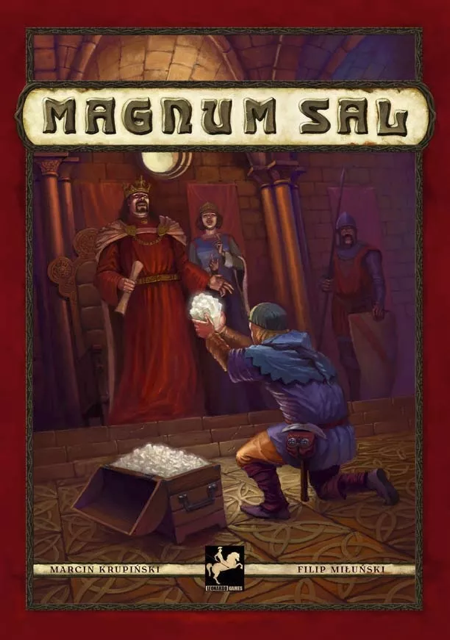
Arguably a leftfield choice for a Top Ten list, Magnum Sal is, nonetheless, a smart and subtly unique worker-placement game. With a beautifully drab aesthetic and a theme concerning the mining of salt in Poland, it should keep the euro-purists happy, but the surprising level of interaction and touches of satisfying tile-exploration mechanics broaden its appeal. Becoming a good salt miner entails gathering tools and new contracts from the main board’s action spots, but, more importantly, actually mining the ‘white gold’ from a separate area composed of tiles. Players will be placing strings of meeples along these tiles, flipping them to reveal the salt’s quality, and then transporting it back to the surface using not only their own meeples, but by paying off those of their opponents.
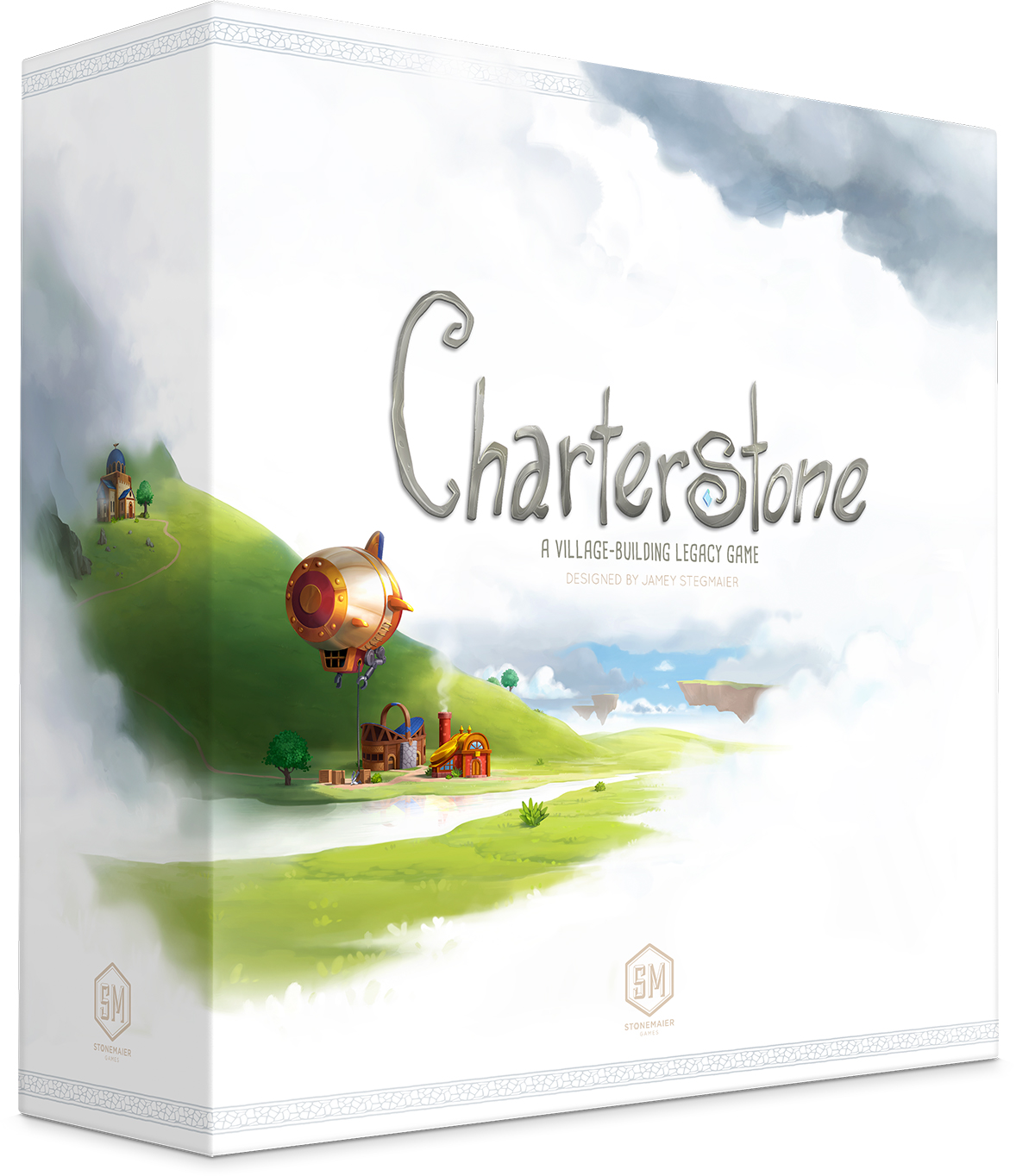
At a glance, this village-building worker-placement game might seem a bit formulaic and sparse. The hallmark ingredients are there – workers, stone, wood, and so on, but how is it different? Put simply, Charterstone is a ‘Legacy’ game: A game that evolves over several sessions through the adding or removing of rules and components. In the case of Charterstone, this means that players will be changing the board as they play – primarily with stickers – gradually turning that empty green and pleasant land into a bustling hub of activity. In typical Stonemaier Games fashion, the components here are all fantastic and, of course, this wouldn’t be a Legacy game if there were no secret boxes to open.