
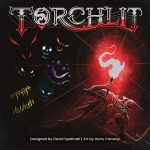
Do you dare to open the dungeon doors as you grasp the light source in Torchlit?
Enjoy dungeon crawling but don’t like the amount of time those games take to set up and play? Well, like a barbarian with a mighty axe splitting open the head of a rogue goblin, could Torchlit save the day by combining trick taking with dungeon crawling?
If you’re wondering what a trick taker is, basically each round (trick) one player plays a card from their hand and the suit played becomes the ‘lead’ suit. In Torchlit, the suits are all suitably nasty but beautifully illustrated monsters (goblins, mimics, skeletons, etc). To be in with a chance of winning the round, other players must play a higher value card in the same suit. If you don’t have the right suit, you can play any card from your hand (but you won’t win) or you can play the ‘trump’ suit, which beats any other suit apart from fellow trumps. Torchlit takes that core trick-taking concept and moulds it like a gelatinous cube.
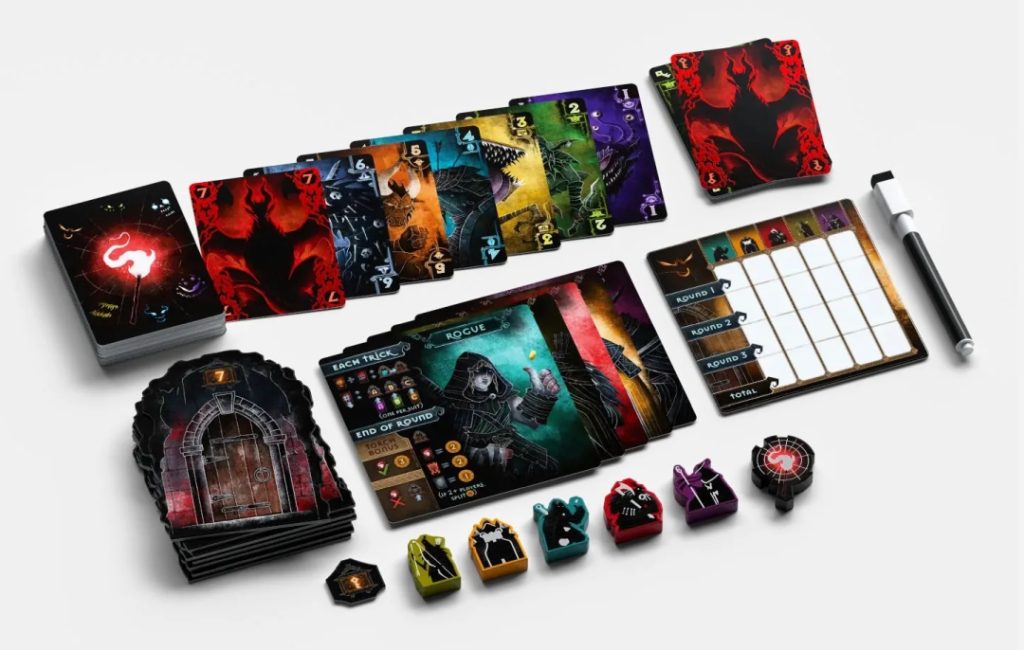
You start the game by setting up seven dungeon doors in the centre of the table. Throughout the course of the game, you’ll be moving your adventurer meeple along the doors by winning tricks. However, before you begin delving the dungeon, you’ll need to bet on how many tricks you think you’ll win and what door you’ll end up on. If you bet correctly, you score three points at the end of the round. This means you’ve got to play carefully to ensure you don’t win too many and part of the skill of Torchlit is knowing when to lose, not just win.
Ending up on the right door isn’t the only way to score points, though – and this bit gets complicated, so strap in. At the end of each trick, the player who played the lowest card becomes the Torchbearer and takes all the cards played before choosing which ones to place into the dungeon underneath the door matching their rank. If there are multiple cards of the same suit, the Torchbearer only chooses one from each suit. Let’s say a three and six of goblins has been played along with a mimic four and skeleton one. The mimic and skeleton would be placed under doors four and one, respectively, while the Torchbearer chooses the three of goblins. At the end of the round, you’ll score bonus points for any monster cards below the door your meeple is on.
The result is a crunchy trick taker unlike anything we’ve really played. Not only are you busy managing the number of tricks you want to win, but you’re also keeping an eye on where the most monsters are because they can bag the big bonus points. This adds a fair bit of game management to Torchlit between each trick, while you pick the Torchbearer, who then decides what monsters to place. This additional level of strategy can make the pace quite slow at times and that 40-minute playtime is pretty accurate. However, the pay off when everything comes together and you pull off your masterplan to not only win your bet, but also slay a bunch of monsters, is as joyful as uncovering some sweet dungeon loot!
Review by Rob Burman
Yes
Torchlit is ideal for aficionados looking to up their trick taking to the next level. There’s a lot to keep track of and while that can initially be overwhelming, it’s worth persevering to be rewarded with tense games often balanced on a dagger’s edge.

Torchlit builds on Skull King’s classic core mechanics with some clever dungeon-themed gameplay twists.
Category: Card Games
Designer: David Spalinski
Publisher: Allplay
Time to Play: 40m
Players: 2-5 Players
Age: 10+
RRP: £18
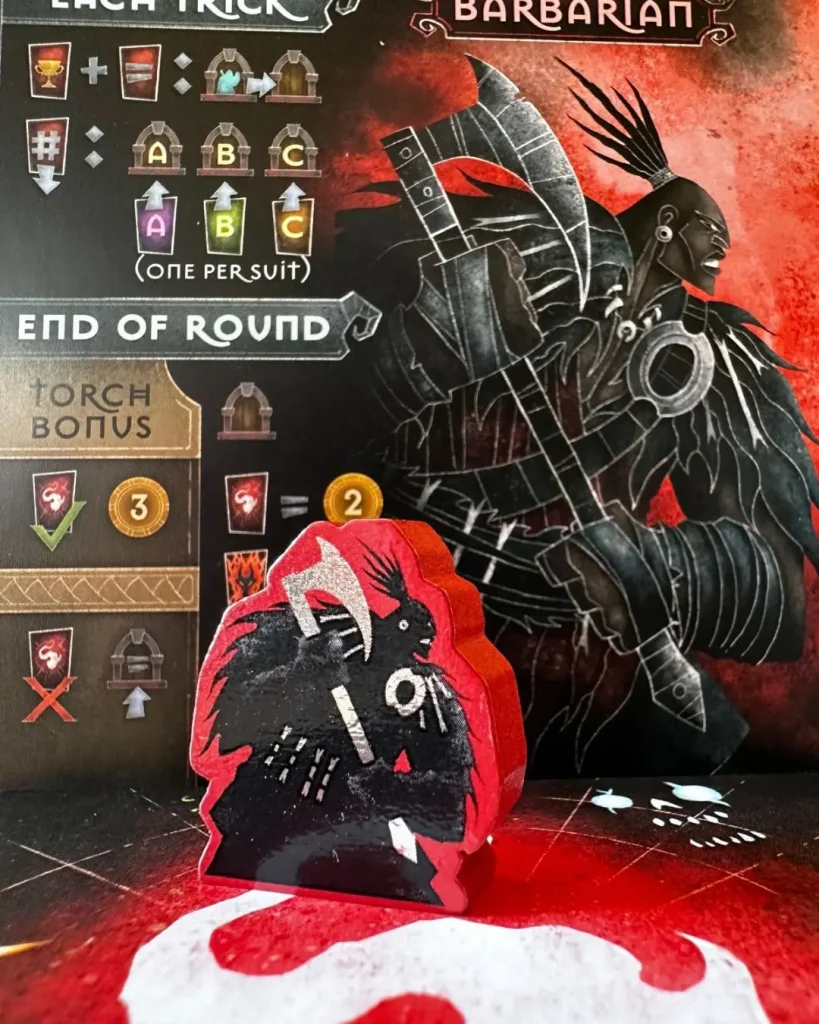
8 Door tiles
Torchbearer token
56 Monster cards
5 Adventurer mats
5 Adventurer meeples
Scoreboard
Dry erase marker
Rules leaflet
Sometimes we may include links to online retailers, from which we might receive a commission if you make a purchase. Affiliate links do not influence editorial coverage and will only be used when covering relevant products