

Tick tock
I know that one of the joys of board games is that they take you away from screens for the most part, but I urge you to pause reading this review, fire up your favourite search engine and go find a picture of the Orloj in the Old Town Square in Prague. Truly a marvel of medieval technology, it includes: an astronomical dial, representing the position of the sun and moon in the sky; the “Walk of the Apostles” – an hourly show of moving figures, notably a skeleton that represents Death, striking the time; and a calendar dial with medallions representing the months. That someone looked at this clock and was inspired to make a game out of it is incredible. That the game they made is somehow this good – that borders on the phenomenal!
If you’ve played a Euro-style game before, you’ll know there’s often a lot going on. Orloj: The Prague Astronomical Clock offers multiple viable strategies, so players can focus on different aspects such as building efficiently, advancing tracks or optimising combos. That can be a hump to get over when you’re trying to entice more casual gamers over to the dark side. If you want to make that task easier, take my advice and set this game up before they arrive. That list of components below isn’t a misprint and there’ll be a point where you think you might be taking longer to prepare the board than those medieval artisans did to construct the real Orloj clock.
Once you’ve done that, digging into the rules of play can seem similarly daunting. So, it’s something of a surprise to find that gameplay – despite all the options available to you – takes just a few rounds to learn. Yes, it’ll take you longer to ‘master’ everything but turns soon start to fly by as the players get into the groove much quicker than you might have anticipated.
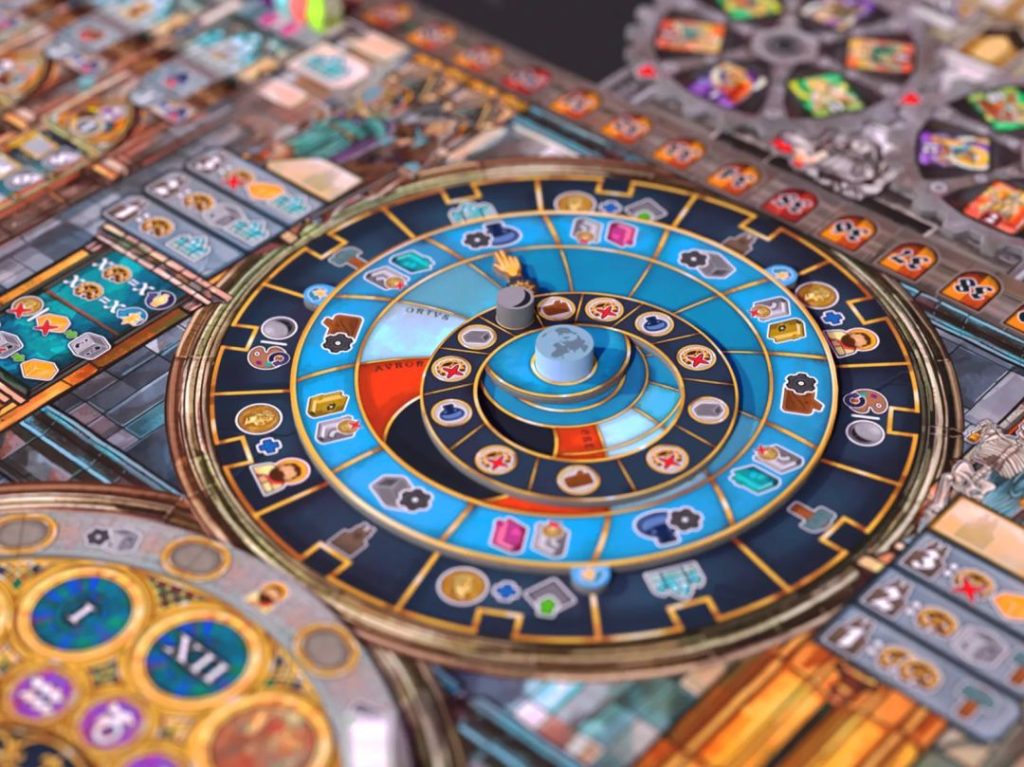
At its core, Orloj is a worker-placement game built around a rotating rondel system that mimics the movement of a clock. Each turn, players assign workers to the dial to trigger actions, gather resources and ultimately construct parts of the astronomical calendar.
This central mechanism is clever and thematic, adding to the game’s strong sense of identity. Rather than selecting actions from a static board, players must carefully plan around the shifting availability of spaces, which adds both tension and a satisfying puzzle element.
The gameplay itself is layered with interlocking systems. In addition to building the calendar, players recruit assistants, develop their workshop and advance along knowledge tracks that unlock new abilities. These tracks are particularly important, as they can open up more efficient actions and scoring opportunities. Over time, turns become increasingly complex, with combo plays allowing for impressive bursts of progress. This escalation is one of the game’s most satisfying aspects, rewarding long-term planning and careful resource management.
Players can also disrupt one another’s plans by occupying key positions on the dial or forcing the clock mechanism into less-favourable states. This indirect competition helps keep everyone engaged and ensures that no strategy can be executed in isolation.
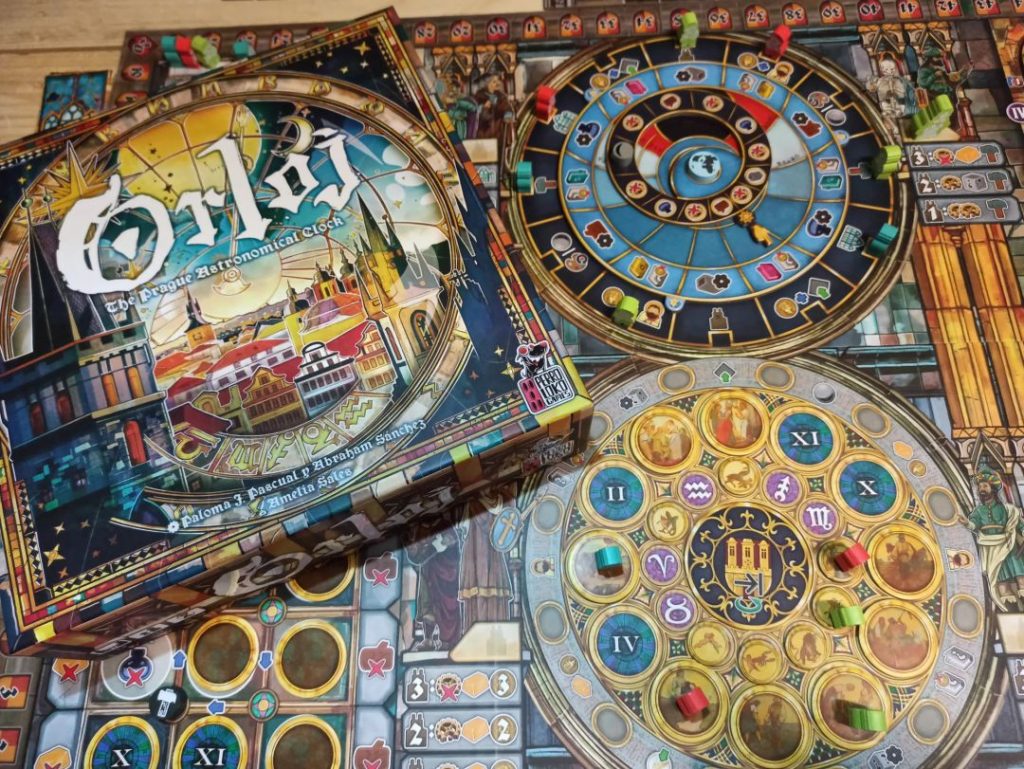
I almost feel like I don’t have to mention how visually stunning the game is. The vibrant and detailed board features bold colours and intricate illustrations that capture the ornate nature of the real clock. Component quality is also high, with well-produced boards and pieces that feel durable and satisfying to handle. It’s busy without being too cluttered – and the same could be said of the gameplay.

Designers: Paloma J. Pascual, Abraham Sánchez
Publisher: Devir Games
Time to Play: 40m-2h
Players: 1-4 Players
Age: 14+
RRP: £69.99
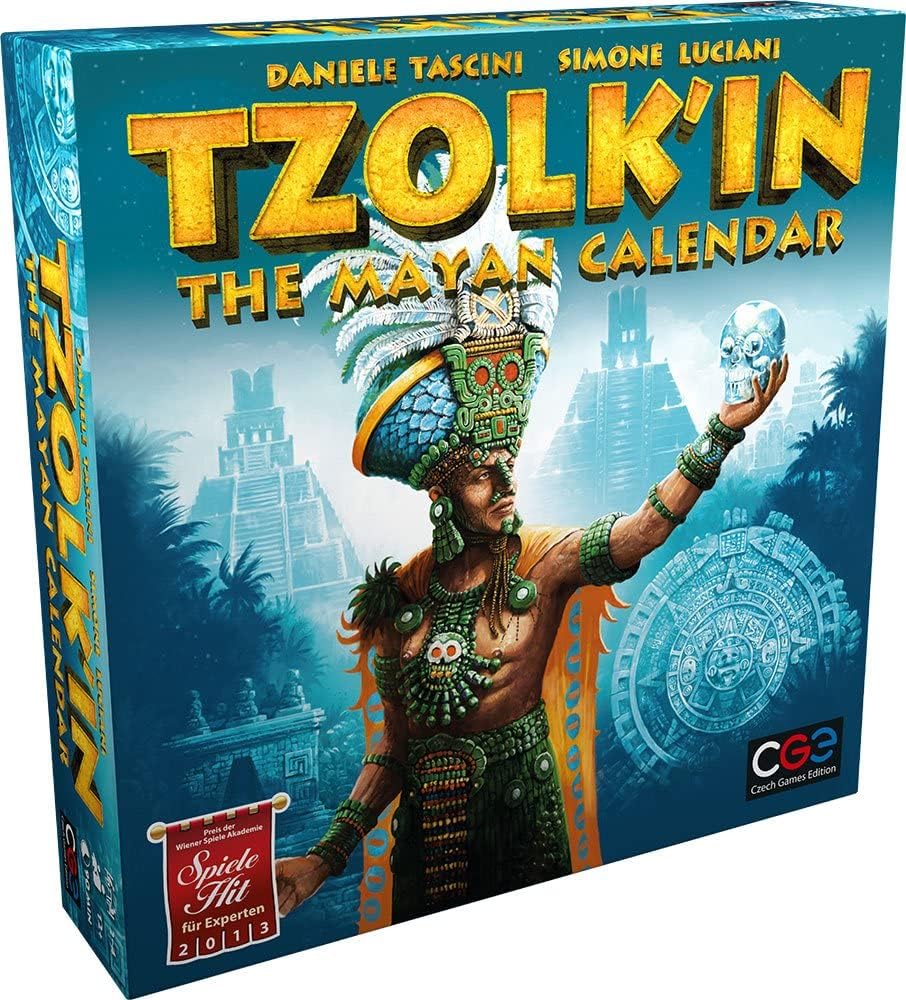
Tzolk’in: The Mayan Calendar
Instead of a clock face, Tzolk’in uses rotating gears that move your workers over time.
Buy Orloj: The Prague Astronomical Clock from Magic Madhouse
Sometimes we may include links to online retailers, from which we might receive a commission if you make a purchase. Affiliate links do not influence editorial coverage and will only be used when covering relevant products