

The dark underbelly of board game retail: counterfeit games. As searches for “is my game a fake?” increase, we delve back into the less than savoury side of the tabletop hobby.
Written by Charlie Pettit
“CATAN has really gone downhill,” a friend of mine grumbled one evening in our D&D intermission. “They’ve clearly sold out. Everything is so cheap and nasty, and it barely even fits together”. I’m not ashamed to admit my face told a thousand stories, and not a single one of them was that CATAN were manufacturing poor versions of their game. Controlling my face (marginally), I asked if there was any chance it could be a fake – and received a vehement no. It was a gift, he said of it, and definitely not fake.
As you’re probably not surprised to hear, it was a fake. It came from a highly suspicious-looking site – one of those made with a ton of spelling mistakes and sentences that don’t make sense – and had concluded that perhaps I was on to something. However, for the past few years, he’d believed that CATAN had chosen profit over experience, and had been telling people exactly that.
I’d learnt about the proliferation of counterfeit board games some years prior. My partner was delighted when I introduced him to A Game of Cat and Mouth, and he promptly bought two copies for some of his friends at Christmas on Amazon. After a swift lecture on using a FLGS for games, he quickly learnt his lesson – when a completely unplayable version of the game showed up. It looked, if you were to take a picture of it from a distance, like it was the same game – but side by side, it was night and day. The box was smaller, lower quality. The text was garbled, and the colours dull. Opening it up, there was no magnet (the core part of the game) and the balls inside didn’t fit into the paw. The barriers were the right size, but there was no space for them to be inserted…
I was reminded of these experiences when TEMU started cropping up everywhere. TEMU is a heavily discounted goods site, shipping straight from China on most occasions. It seemed like every Facebook ad showed me a handy gadget or two for a few pence, until the algorithm realised I was a gamer, and suddenly I had a whole lot of options…And of course, TEMU is one of many. Shien, Ali Express, even eBay, Vinted, Amazon, all have the potential to hold non official products. Oink Games, overwhelmingly lauded across the industry, at £2.89 rather than £20? Seems too good to be true. And it is. But at that, it’s absolutely no surprise then that innocent shoppers, come Christmas and birthdays, or even after being enchanted by a game, think they’re getting a total bargain, and in some cases, the games are playable. But why shouldn’t they?
“There is a financial impact, obviously, with lost sales.” Tony Guiletti, of Czech Games Edition (CGE), publishers of the likes of SETI and Codenames tells us. Board Games are not natively high-profit industries, and every lost sale contributes to lower numbers, making it harder to make additional games in future. It’s hard to estimate how big an impact fakes have on the hobby.
In a 2018 Tabletop Gaming article, we spoke to Christian T. Petersen, then CEO of Asmodee North America, who suggested how widespread the issue was.
“We’re able to do a bunch of data analysis online and we can also compare year-over-year numbers and look at the sellers actually selling the product,” Petersen explained at the time. “A product like – just as an example – 7 Wonders may have been affected more than 60%.”
When you consider how frequently 7 Wonders appears on shelves, and more generally, the number of games in households nowadays, it feels inconceivable how widespread the problem really is. Although for Asmodee at least, there’s a hope this is actually improving.
“The initial influx of fakes online was sudden and overwhelming and we learned a lot from our customers reporting issues to us. We’re very appreciative of that and continue to encourage our customers to reach out with any concerns.” Adam Santoni, Senior Online Brand Protection & Compliance Specialist at Asmodee explained. “We devote a lot of time and resources to fighting the problem, and I think that the additional efforts have really paid off. Today, with the exception of a few marketplaces notorious for selling fakes, I’d say that so long as you shop consciously and purchase from retailers who source directly from Asmodee or an Asmodee distributor, consumers can easily avoid being duped by a fake.”. That’s certainly not to say they don’t happen though. Adam explains that they appear all over the world, with counterfeits sometimes cropping up in brick and mortar store, or third parties selling through paid ads and social media pages
Though the financial impact is almost obvious, the problem runs far deeper.
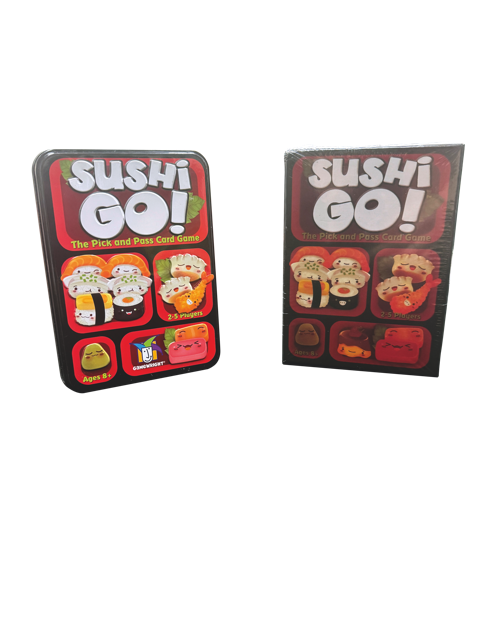
“As a distributor, counterfeits create a frustrating challenge.” Rob Trounce, Marketing Manager at Hachette Boardgames UK explained. “They undercut legitimate sales, affecting our ability to invest in marketing, promotion, and future releases. Worse still, they damage trust—if a customer unknowingly buys a fake and has a bad experience, they may assume the game itself is poor, leading to negative reviews and hesitation around future purchases.”
The difficulty goes yet deeper. “More broadly, counterfeiting threatens the sustainability of the industry. The success of board games depends on fair margins across the chain—from designers and artists to publishers and retailers. Counterfeits siphon off revenue without contributing anything, making it harder for legitimate publishers to thrive.” Given too, a worldwide discussion of tariffs, it’s going to be felt even further in the future.
“Counterfeits also impact our brand as well. We take pride in making a product that is of high-quality material, without errors, and designed in a way that the game provides the best user experience for the people playing. Much of that experience is tarnished if a person’s first experience of Codenames is with a counterfeit.” Guiletti adds.
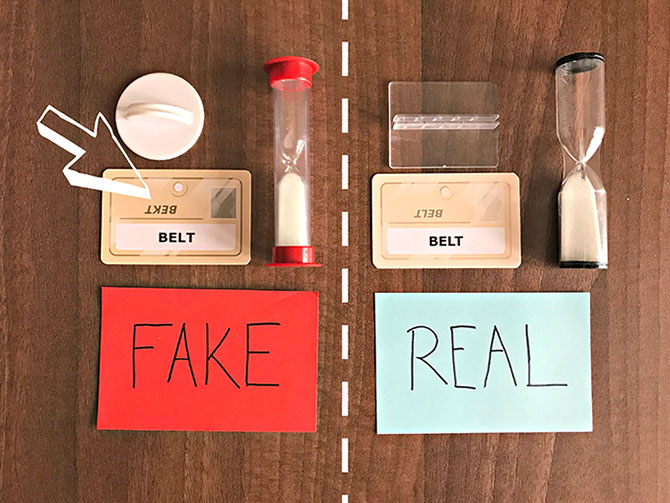
Indeed, Codenames has long circled the centre of discussions about counterfeit games, to the point that several years ago CGE posted on their website to show some immediate differences in their copy, and a counterfeit version that was circulating. They sound straightforward – a different colour timer, more fiddly holders, and a typo – but the impact is much wider.
“We do field customer service requests frequently with complaints about misspellings, or cards with inappropriate words being in their copy of Codenames. Whenever this happens, we know that they purchased a counterfeit. The worst experience is when adult words get put into counterfeit products, exposing children to obscenities.”
Knowing what’s in your box is important – is the family friendly game actually appropriate? Are your components made from safe materials? Games that are made through legitimate channels must meet certain safety standards, whereas these can be overridden in counterfeit games. Do you really know what that figure is made out of? Is there anything to say it’s not harmful to your health?
Rob explains that at Hachette Board Games UK, they came across this very concern.
“The first big-volume counterfeits we encountered were Quoridor and Katamino…In the case of Katamino Family, the unauthorised copies did not adhere to the typical safety and quality standards expected of the official product. We found issues around the toxicity of the paint, and also splinters on the wood. This was a particular problem for Katamino Family as it’s accessible from a young age, and young children are more prone to putting the pieces in their mouths.”
Whilst Czech Games Edition are often cited when fake games are in discussion, another big story of counterfeits is with Kelp. The game was successfully funded on Kickstarter, but when it came to fulfilment, people seemed to have their hands on the game before it had ever been dispatched. The story goes that the market had been flooded with fake copies, ones of significantly lower quality, to say the least.
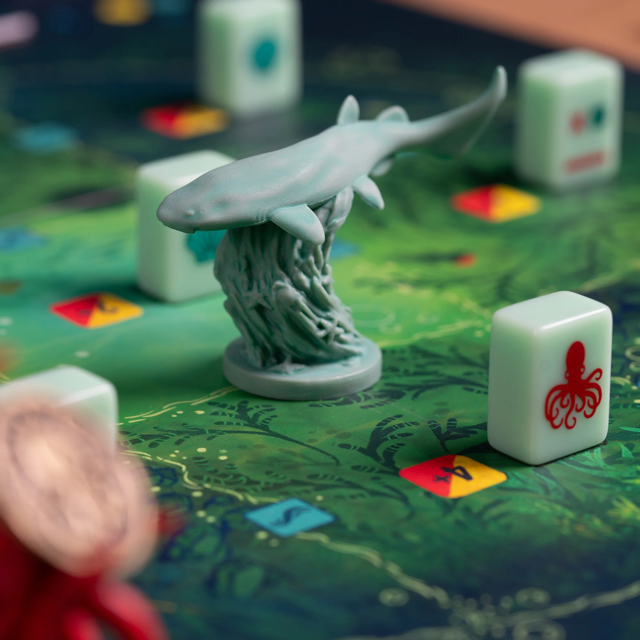
The lovely shark miniature included? In the fake version, it had been replaced with what was described as a LEGO shark.
There were a million reasons Kelp’s story echoed around the board game industry, and part of that was because the game was not even new, but entirely unreleased. It’s more often that older, established games are at risk.
“If something is popular and sells well, then there is more chance that it could be counterfeited at some point by a third party looking to make a quick profit.” Tyler Lipchen from Panda Games Manufacturing, a company known for high-quality board game production (look for the tiny panda on your board games, I bet you’ve got a fair few!) tells us. “It is important to keep in mind that most counterfeit scenarios happen for games that have been on the market for some time – in these cases, counterfeiters buy a game on the open market and recreate it on their own. Very rarely is a brand new game counterfeited where assets of a game in production are stolen. The counterfeiters want to see a track record of popularity and sales to put the time and effort into making copies.”
Tyler reassures us that they have strict and stringent measures in place to ensure everything is held securely, and that Panda has “never had a situation where a product was counterfeited during initial production in the past”.
So, if not at the point of production, where do these games emerge from?
Whilst Panda Games are confident their games have never been counterfeited, other manufacturers may have found this – whether the designs were obtained as part of the process, or perhaps the manufacturers swapped and the designs were retained. That’s not the only time designs can be stolen, however, and as expected, it can be seen as another casualty of the digital age.
“Counterfeiters focus on games with simple components—standard cards, basic cardboard chits—because they require less effort and cost to reproduce. Additionally, they need access to artwork, which can happen if files are leaked or sourced from platforms like Tabletop Simulator, where high-quality assets are often available. Some publishers have inadvertently contributed to the problem by sharing production files with disreputable factories in China, even if they never proceeded to work with them.” Rob Trounce explains. The same sentiment is echoed by Stonemaier Games, producers of Wingspan, headed by Jamey Stegmaier, who writes frequently on industry-related topics. Having experienced additional counterfeits, Jamey suggested publishers don’t release print and play versions, don’t use Tabletop Simulator, use difficult to copy components, and work to keep games in stock (so a real version is always an option).
The first two surround the availability of counterfeiters to gain high-quality assets to use to create their own versions. Whilst print and play versions are generally different to the final product, they do offer related art, or expandable versions – or, can be packaged as if the real game. Tabletop Simulator also encourages publishers to upload their componentry pieces to allow users to play digitally. As a player, it makes for a more reasonable experience, and publishers want players to be able to play the game for playtest purposes, or even just to be able to experience it, and it feels strange to consider it might be utilised for more nefarious purposes.
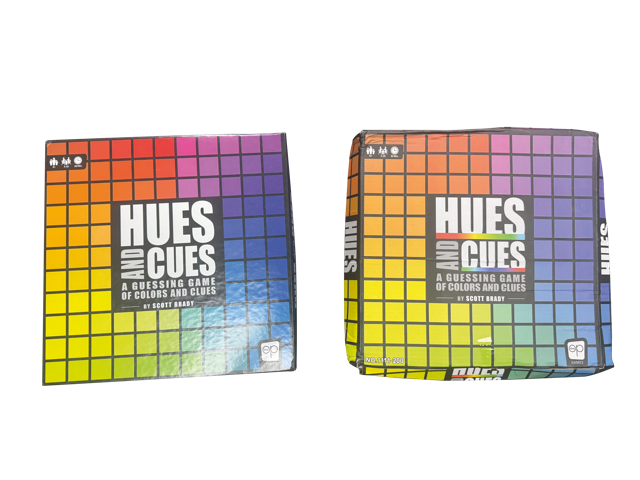
Even publishers who avoid these aren’t guaranteed to be safe from counterfeits, however. Whilst difficult componentry might slow them down, they aren’t necessarily concerned with your experience – case in point, my experience of A Game of Cat & Mouth, where it was entirely unplayable. The Shark from Kelp is another example of a lack of care from counterfeiters. As modern technology is both cheap and accessible, there’s not a whole lot stopping games from being scanned or photographed, and reproductions made from there.
“All of our games are produced in the Czech Republic at a factory that is owned by CGE.” Tony adds. “So, the only way counterfeits have happened is by people scanning our legitimate products, or recreating their own files (or a mixture of both). We have traced manufacturing to factories overseas, and in some cases have had to bring litigious actions against them.”
“Typically, they’re being produced in China.” Adam Santori, of Asmodee echoes. “A manufacturer scans the artwork, creates molds of the components and mass produces them with cheaper, poor quality, likely untested materials. An individual may solicit a manufacturer to make a counterfeit print run of a specific game for distribution, or the manufacturer may sell directly to consumers via one or more of the 3rd party marketplaces known for counterfeit sales.”
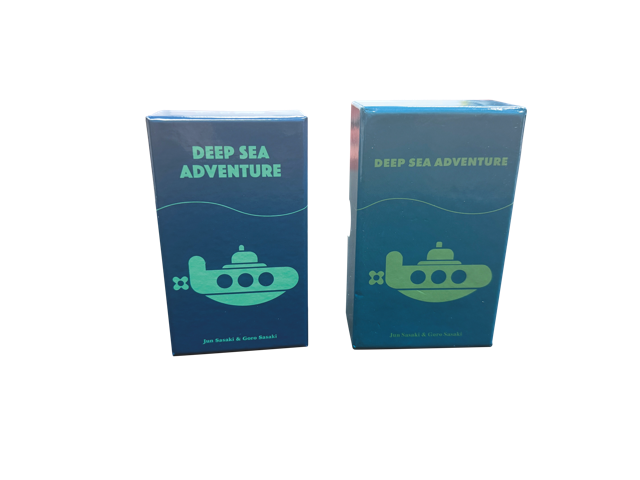
Oink Games were an example we used at the beginning, as they’re small, popular, and previously difficult to get hold of games, that can be found in moments on sites that are clearly offering an illegitimate version.
“Oink Games are a prime target because they have minimal components—mostly cards and chits—but sell at relatively high price points,” Rob explains when we ask why this might be. Hachette Board Games UK are the distributor of Oink Games in the UK now, increasing their availability. The games generally sell for around £20 at retail, though it varies by game. “Oink takes great pride in quality, with their games featuring premium production values despite their small size. This makes them attractive to counterfeiters, who can easily cut corners by using low-grade materials—thin cards, flimsy chits, and pixelated printing—while still undercutting the official price. The result is a flood of poor-quality fakes that deceive customers while damaging the reputation of the genuine product.”
In fact, the range of different games that Oink Games produces contributes to this. Some are just cards, some are more complex. To an extent, if you’re paying a mere £2 for a board game as an average consumer, you’ll write off a bad experience as having been worth the gamble – but that has a negative effect on the likelihood you’ll want to pay £20 in future.
Given it made up part of our example, we asked what they can do about it, and whose responsibility it is. Generally, it falls to publishers and distributors, with the publisher taking most of the responsibility, because long term strategy should be at play.
“The best course of action is to take them down as early as possible. At Hachette, we have an internal legal team dedicated to this issue, as well as external specialised lawyers with branches and legal rights in all impacted countries. They actively scan listings, and we build action plans tailored to each seller type, location, and potential impact. Timing is crucial—if a counterfeit is identified within three months, we might need to take around 50 enforcement actions. If it lingers for two years, that number climbs into the quadruple digits. This makes it a long-term battle, but taking swift action significantly reduces the spread. Publishers need to keep tight control of their production files and only work with reputable manufacturers. Another tactic is to update a game to disrupt counterfeiters. For example, we worked with Oink to release the Deep Sea Adventure: Boost Edition for its 10th anniversary—introducing new gameplay elements, upgraded components, and a redesigned box to set it apart from fakes”. We can’t help but wonder how many redesigns or new anniversary versions have a double benefit of reducing fakes too – we’re looking at you, Catan and Splendor.
The thing is, figuring out whether a game is counterfeit or not can sometimes be really difficult. Some counterfeits will use the actual product photography of the publisher in their listing of the game, meaning the images you’re looking at are of the game you want, but what you receive may differ greatly. Equally, they may make attempts to obscure the name, or slightly mis-spell it, to avoid name related disputes or trademark infringements.
For example, a clearly recognisable image of Azul on a site known to provide fakes shows images where the tiles are across the name of the game, and its product name is “Blue Standard Edition Family Strategy Board Game – Tile Placement, Paper Materials, Perfect for 2-4 Players, 20-45 Min Playtime”.
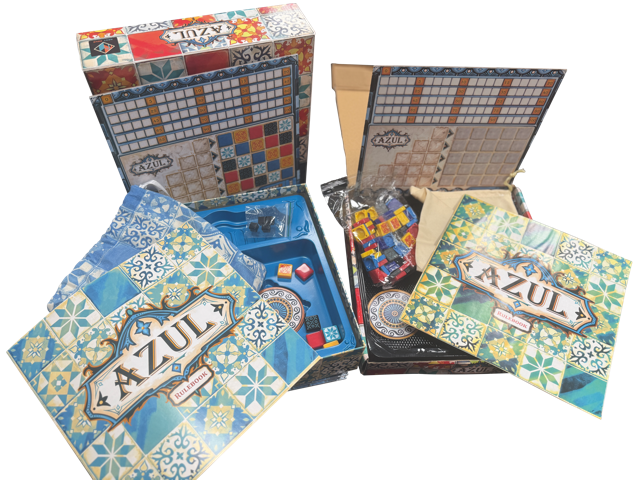
But if you saw an ad for the product on Google or Facebook, with the pictures that are included, you’d be forgiven for believing it was Azul. “Plays almost like the original”, one review notes, suggesting it’s not entirely convincing. However, we’ve all purchased something without reading the description entirely before. If you think you’re getting a bargain, the game showed up when you searched it, and the pictures show what you want them to, you can be forgiven for not thinking to read the title – especially as in the world of SEO, even legitimate Amazon titles can be exceedingly long. Regardless, when you’re looking at paying. 79p for Deep Sea Adventure – postage alone must cost more – it’ll certainly be an adventure, just not the one intended.
“A never-ending game of whack-a-mole”, is how Alex Murty, Head of Global Distribution and Licencing for Joking Hazard, said of sending take down notices for product listings to be removed. “It’s a nightmare, especially at Christmas… They do work, but as soon as one goes down, another one appears”.
“It is an immensely complex and difficult problem.” Agrees Toby Meaney, former UK Sales and Distribution for Oink Games. “To solve it takes a huge amount of time, usually costing more than the losses incurred from the fake products being on the market. Very often, the easiest solution is to work with specialised third-party companies who manage the problem, but yes, this also costs money. Then sadly, the product needs to be updated, packaging, layout, and general graphics to counter it. This can then also be counterfeited. Tight control over the supply chain and trusted manufacturers is a key step to help future issues. Sadly though, if the game is popular enough, they will copy it, because it’s easy money for them.”
It’s a return to an earlier question– are games where their artwork is being updated and their componentry adjusted really due to modern day expectations, or is it another means to slow counterfeiters? Regardless, there’s only so much that can be done.
“Everything costs time and money,” Tony Guiletti, of Czech Games Edition agreed. “For example, the biggest hindrance to counterfeits on Amazon is to enrol in their Brand Registry, and then enrol specific products into their Transparency program. Brand registry allows you to make trademark infringement claims as the brand owner, and gives you a separate site to file claims directly to Amazon. The transparency program requires an encrypted QR-type code with a unique identifier to be put on each product that is sent to Amazon, and Amazon will not list a product for sale on the platform that does not have the code.”
“The best first step though is getting trademarks for your game in the countries that you sell the most copies…Do these steps work? Yes, it is a lengthy process and requires diligence. Every time you get a counterfeit seller removed, it seems more are eager to take their place – or the seller made duplicate selling accounts.”
However, you must have a trademark to enrol in the brand registry, but you will need a trademark in each of the countries you are trying to enforce it in – Amazon UK, Amazon US, etc. It’s not a cheap option, nor a quick one, and requires some anticipation that many might not have. And that’s only if games infringe on the trademark. Board game design isn’t currently protectable, which is why you can see mechanics repeated through different games. Hypothetically, reskinning a game to give the same game play, but with different art or text would be extremely difficult to enforce protection of, and we’ve seen versions of this over the years.
We previously reported on Splendor being counterfeited as “Stone Merchant”, but you see it in mainstream advertisements on with the likes of Cards Against Humanity – with various “Cards Against” (Disney, Harry Potter, etc) replicating the game with minor amendments but circumventing the original publishers. Cards Against Humanity itself was a version of another game, making the line a little fuzzier than you might like.
You would need a patent to protect the mechanics, but so often mechanics are reused between thousands of board games, to such an extent it would be difficult to obtain. Copyright might protect the more specific creative expression, but not the mechanics. Trademarks stop the use of the same name, but not the adjacency. All three would be complex and expensive, if even achievable.
Does it work?
“We do think it helps when infringers see IP owners taking action.” Julien Lafon, IP Strategy & Brand Protection Legal Manager at Asmodee says of it, when we ask about legal action once taken against an Amazon seller.
However, these protections are only of any use if sites actually use them to prevent them being sold. On the other side of the coin, in an industry that grows so quickly, and without diligence that to many will feel excessive, the average purchaser many may never even know they own a counterfeit game. I can’t help but think of my copy of Timber! as a child, that I vehemently defended was the original to everyone else’s Jenga for years. Oops.
Ultimately, it affects everyone – from the designers, to the publishers, to the distributors, right down to the players. Even the sellers can be impacted, though that’s often by some unsavoury choices.
“In past years since the pandemic, we’ve definitely seen an increase of counterfeit games being returned to us and the customer keeping the stock we send out. Thankfully, we have a pretty robust returns process so we’re able to spot them very quickly and, in these instances, we report them to the local police who we have a very good relationship with.” Arthur Blazey at Zatu Games explained.
There’s a difference of course, between innocently purchasing a game online for a great price and discovering it’s a counterfeit, and deliberately ordering a game to return, replacing the item with a fake one, but it’s yet another problem within the industry.
Plus, while we’re focusing on physical games you can purchase, there are far too many instances of either IP theft or digital file theft.
“Modiphius experiences digital theft with the piracy of PDFs for our roleplaying game titles and STLs that we sell on our webstore and other platforms.” Samantha Webb explained, Head of Brand at Modiphius. “Piracy of these products typically means the hosting of those files out ‘in the open’ online where anyone can download them. We have far less visibility on individuals sharing PDFs with friends, but anecdotally, we know it happens within gaming groups. But we also experience it when people are publishing their own content using branding like art and logos that belong to us or one of our licensors without their authorisation, to make it look like something we published, called “passing off” in the UK.”

Modiphius, working with big franchises like Fallout, have both their own creations to worry about, as well as the licensors, as counterfeits often infringe on copyright. Often the latter have bigger legal teams, allowing somewhat more freely for legal action to take place, but the scale of the problem is difficult to ascertain.
“I bought this game off of Vinted, and it turns out it was a fake!” a friend of mine said to me recently. The pictures had looked fine enough, the seller had great ratings, and there were no red flags to speak of. The friend got in contact with the seller, somewhat cross at the situation – only to find that the seller was absolutely mortified. They had no intention of distributing fake games. They’d bought the game, played it a few times, and then sold it on. So counterfeits aren’t always black and white in the good vs bad of the world. In this instance, both parties agreed that my friend would receive a refund, and that was that.
It’s not always so simple – for games that aren’t part of the Amazon program, you should always return them and flag the seller. The process is less straightforward on the mass-sale sites, where some will require you to pay a fee or shipping cost to return it, which often exceeds the value of the product. Of course, if you’re reading this article, you’re probably somewhat entrenched in the hobby, and you’ll know that fakes exist and that if it’s that cheap, there’s probably something amiss, meaning hopefully you’re less likely to buy a fake in the first place…
The easiest thing of course is to buy from legitimate sources – places that have supply set up with real distributors. But while that’s easy for someone who knows their games, it’s a little more unfamiliar to those who don’t – who see a bargain and think they’ll give it a go.
In the course of writing this piece, I’ve spoken to numerous designers, publishers, suppliers and distributors alike, all of whom were familiar with counterfeits in the business. To my surprise, mentioning the article to players, many didn’t realise it was a problem for the industry. Many wondered if they’d perhaps inadvertently got one themselves. So what can you do for those who genuinely don’t know to even suspect?
“Sometimes in an online forum I will see someone report that they unknowingly purchased a fake online and share their experience. I’m thankful for those that share and also for those who understand the downsides and discourage knowingly purchasing fakes.” Adam Santori, of Asmodee, adds. “I think that we’re very lucky to work within an industry where the customer base is very conscious of this fact and is loyal to the stores who sell genuine games and support the hobby. Customers often want to support the studios who continue to make those great games, directly. The core of our business is about bringing people together to enjoy great experiences. We stand by that purpose and that means coming together as a community to fight against counterfeits.”
A core of what you can do in that case is be vigilant, and talk about it so that when someone is tempted by a counterfeit game, they might be tempted to think twice. And my CATAN owning friend? Well, he’s a fan once again.