

Line of Fire: Burnt Moon is a fast, tactical two-player deckbuilder game that strips down the Undaunted system into a compact, punchy battle of lane control and clever card play. It’s rich in strategy and gorgeous in design…though not quite as small-table-friendly as its box suggests.
Written by Dan York
Honey, I shrunk the Board Game. The LFA are back, fresh from their conflict on Callisto in Undaunted 2200, this time we’re on Io, and the game box is looking significantly smaller. Line of Fire: Burnt Moon is a deckbuilding game and pseudo-sequel to Undaunted 2200: Callisto. It inherits a lot of core mechanisms from its predecessor but drops the skirmish wargame board for a simpler lane-based majority control central aspect.
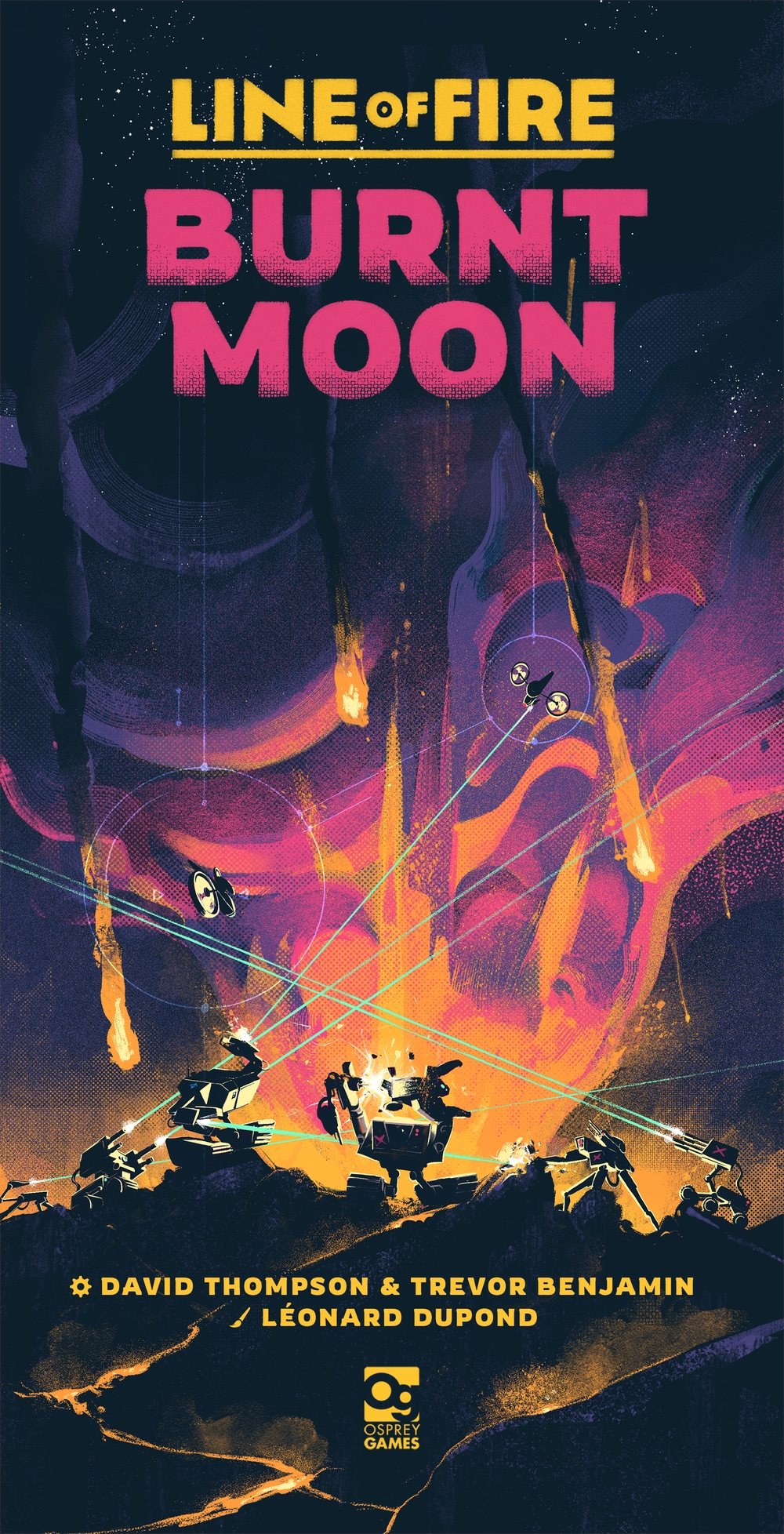
Each game pits two players against one another, trying to score by both holding most units and having access to a “Moss ROV” card in a lane, taking an action to flip that lane’s scoring tile and claim its points, aiming for a total of eight. Players use decks which they can upgrade and fortify, adding new types of actions to their turns. Cards are used in one of three ways: either to bid for initiative, discarding the card to earn the right to take the first actions each round, or to deploy ROV (robots) to the lanes, or to use those same cards to activate the abilities of the ROVs you have already deployed. Each ROV has a unique role, capturing control, removing dead “interference” cards from the deck, bolstering your defences, or launching powerful attacks to destroy units in the opposing lane.
The mechanisms from the Undaunted system have been translated so well into this slimline format. Units can’t act unless you bolster your deck with redundant copies of their cards, but that creates tension between having reliable access to cards when you need them without removing your ability to use your entire squad. Without the map from prior games, the tactical puzzle is different, it’s hard to brute-force a win by just throwing your guys in one place. The game encourages you to play more carefully. If you’ve played the series, you should find this easy to pick up, though the flipside is true: new players might find the deluge of keywords and icons, along with the unique nature of the Undaunted system, to be hard to grasp on first reading.
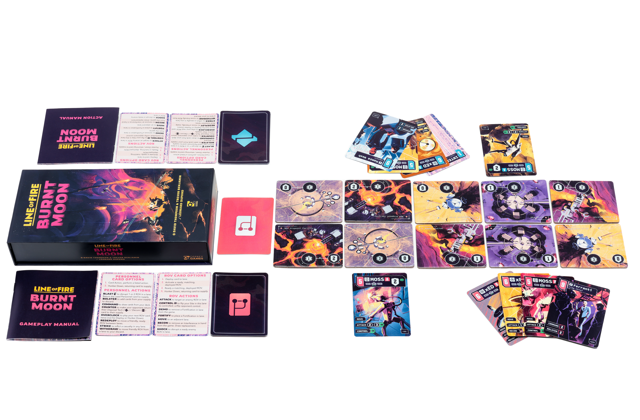
I love how balanced the cards are and how dynamic each game is. So much of winning a round comes from watching your opponent draft their deck and making decisions that best respond to it. Every card type has precise and powerful use-cases, and victory comes from carefully managing how each unit performs in your strategy.
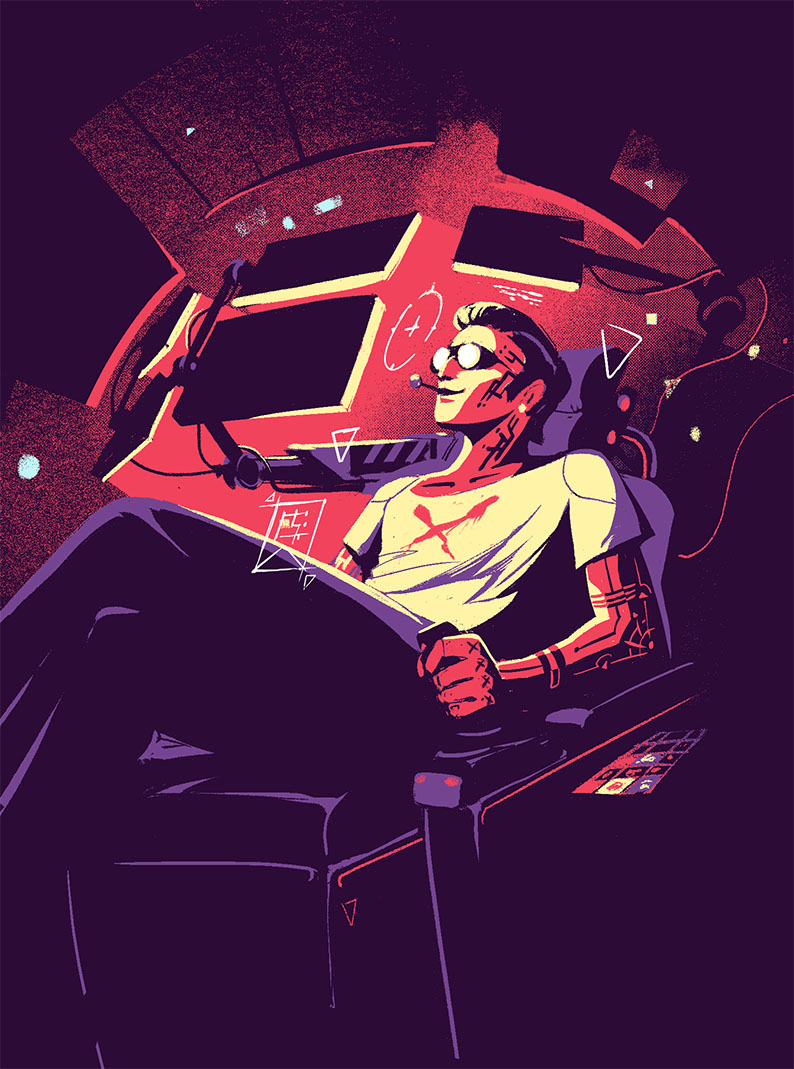
I also adore this production, the artwork, showing each ROV in different situations, is gorgeous and evocative, and the way the cards are laid out makes parsing the game state easy once you know what the icons mean. The small box with personal player boxes is cute and makes setting up easy, but I wish there were more space in the box to allow players to sleeve their cards; art this good should be protected from hours of shuffling. I also feel like the game has too large a footprint when it’s set up. A small box like this is perfect for a travel game, but the card supply, spread so everything can be seen, effectively doubles the tablespace needed, which is a shame.
Overall, I love this game, it suits my tastes as a lover of deck-building games like Star Realms and the 30 minute playtime is just the right amount for games to feel interactive without getting stale. A fabulous production from Osprey, which will likely be my go-to two-player strategy game when I’m in the mood for something tactical and dynamic.
We think this is a must-play game.
Sharp gameplay, dynamic strategy and an antidote to old-school deck building.
Try it if you liked Undaunted 2200: Callisto, as it’s turning a spiritual sequel into a cracking game, stripped down to nothing more than its solid core.
Buy Line of Fire: Burnt Moon here
Designer: David Thompson, Trevor Benjamin
Publisher: Osprey Games
Time: 25-35 minutes
Players: 2
Age: 14+
Price: £23
Sometimes we may include links to online retailers, from which we might receive a commission if you make a purchase. Affiliate links do not influence editorial coverage and will only be used when covering relevant products