

From living in a van to being one of the most inspiring figures in gaming, Sir Ian Livingstone tells Matt Chapman about the highs and lows as Games Workshop turns 50
“I’m glad to still be here,” says Sir Ian Livingstone with a laugh as we chat about the longevity of another British icon, as Games Workshop enters its 50th anniversary year. And as he thinks back to that first tiny store in Shepherd’s Bush, there’s one memory that stands out most vividly.
“One of the most significant memories was living in a van with Steve Jackson for three months,” Sir Ian remembers. “We started the company with John Peake and Steve in our flat in Bolingbroke Road in Shepherd’s Bush. John didn’t opt to go on the journey with us to do roleplaying games. He left. We left his flat. We went to the United States, ordered a bunch of games, met Gary Gygax. We thought this is going to be a full-time occupation.
“We came back full of excitement, full of enthusiasm, but with no money. We had to go to the bank manager, and we thought, of course, we’ll get a loan for this Dungeons & Dragons game. The whole world’s going to love it. And you go to the bank, explain what the concept is, and the bank manager looks at you rather like a dog watching television, and asks you to leave with no money.
“So we were obliged to use what little we had in getting a small office at the back of the estate agents. But when you’re young and have found a path in life that you think is truly exciting, being so lucky to turn your hobby into a business – albeit a tiny business, that is incredibly motivational – it didn’t seem like hardship. And we used to laugh every night as the rain was lashing down on the van. So I remember those days quite vividly.”

Do it again. Especially when you start with nothing, you learn so much and you make lots of mistakes. But you learn from those mistakes. We could have grown the business a lot better if we’d had investment capital, scale up capital, and the usual way of funding a business. But it was a time of economic depression in the late ’70s, so that wasn’t available to us, especially for something as weird as a roleplaying game, as society saw them then. But to be able to start Games Workshop, go on to do Fighting Fantasy, and ultimately get into video games and launch Tomb Raider – it’s just been an amazing life. And I wouldn’t change any of it.

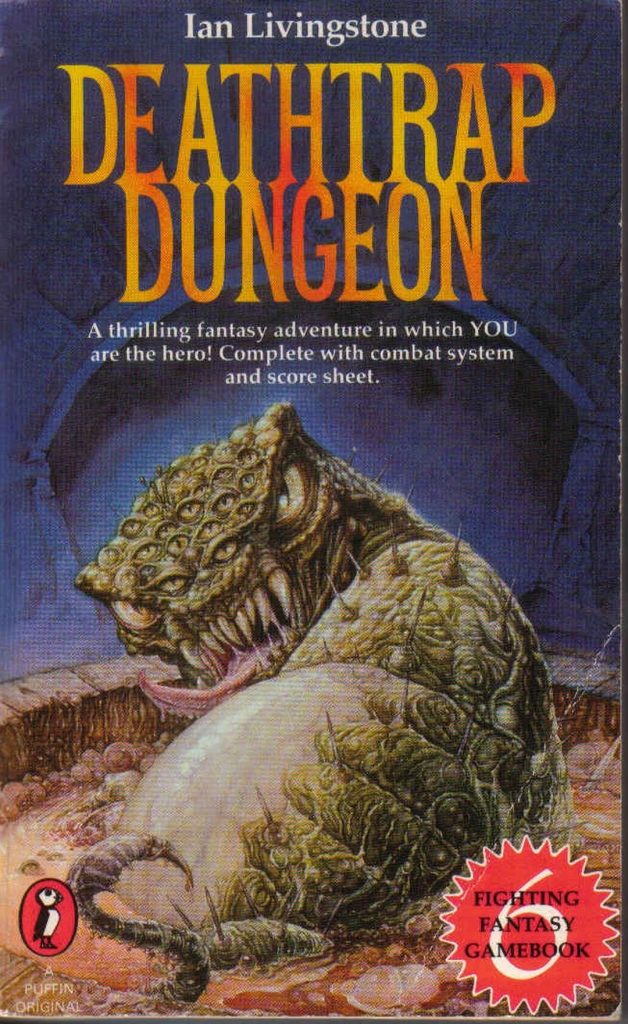
It’s very humbling, and it makes me very proud, and sometimes I just can’t believe it. I get stopped in the streets these days as people who read Fighting Fantasy game books as children have now grown up, and they have this sort of flashback and imagine themselves exploring Deathtrap Dungeon or City of Thieves. And they often thank me for saving them when they might have been in a particularly dark place in their childhood or for getting them into becoming involved in the creative industries, either as writers, authors or artists.
It created something very powerful in a young child’s mind that stayed with them forever, and I find that absolutely amazing. And the fact that you’re now told that Fighting Fantasy got children into reading and that they’re great for literacy, great for critical thinking or the other educational values they attribute to those books now, is incredibly rewarding and humbling. It’s one of the reasons I started my own school, the Livingstone Academy in Bournemouth, to try and bring that sort of learning by pairing collaboration and participation skills with qualifications and knowledge. It’s the application and the participation that made Fighting Fantasy so powerful. It wasn’t a passive experience, it was an interactive experience in which you, the reader, were the hero. That’s a very powerful thing that was not really understood by the audience or me at the time.
Well, I did badly at school, you know, I scraped through my O levels as they were, GCSEs now. I managed to get one A level, the lowest grade possible. I was a bit of a non-conformist. The head teacher wanted me to leave, he said, you know, ‘Livingstone, why don’t you go and work in a garage or something?’ And I just didn’t get that. I couldn’t do rote learning, I didn’t like knowledge for knowledge’s sake. It’s the application of knowledge for me and the contextualising of knowledge which is important to learn.
And I think using games-based learning contextualises a lot of subjects that children otherwise would find difficult. And in the case of video games, if you park your prejudice against one or two titles that are 18 rated for a reason, the same way that films are, and think cognitively about what’s happening when you’re playing a game – it requires you to problem solve, you learn intuitively, you can fail in a safe environment, you’re not punished for making a mistake like you are in an exam. Games allow you to be a winner over time. We all learn at different speeds and games encourage you to try again. You’re not seen as less able, as you are in an examination, which has to have a certain percentage of losers, as it were. That disincentivises you for life and pushes you away from having an entrepreneurial mindset.
Whereas in games like Minecraft, which is effectively digital LEGO, by building these 3D architectural worlds a child can learn contextually. If they learn that applying the heat of a furnace to silica sand can make glass and they put that glass into the environment, they won’t forget that. If some teacher is droning on from the front of the class, broadcasting that information, chances are they are not even listening. So again, it’s that participation and application that is so key to much deeper learning.

I wouldn’t like to say British games are better than European or American games, but they’re certainly different and differentiable, and they have that unique creativity and sometimes humour that is liked globally, which is amazing. And I think the reason we got into games and video games, so early, is because the BBC Micro was a cornerstone of computing in the 1980s and a lot of people had a Sinclair Spectrum, a very affordable, programmable computer. Put that into hands of a creative nation, which the UK is, and hey presto – one the outputs of that is video games. And with regard to board games and tabletop games and roleplaying games, we have a great history of creating those games. So I think it’s no surprise that companies like Games Workshop became the force globally that they are.
Well, I can understand it. The Warhammer brand speaks to the consumer and Games Workshop is the public entity that speaks to the City of London and beyond. For me, it looks weird. It takes a bit of adjustment, having 50 Years of pattern recognition of Games Workshop. But you can see why it’s done.

I think some of the board games we created did okay for the time, but should have done better. Apocalypse, one of the first four that we did, was designed by Sheffield University lecturer Mike Hayes. And while people thought it was like Risk, it’s a million times better than Risk and it should have done better. I think Talisman did better than we thought it was going to do, so you can never quite know how well games are going to do.
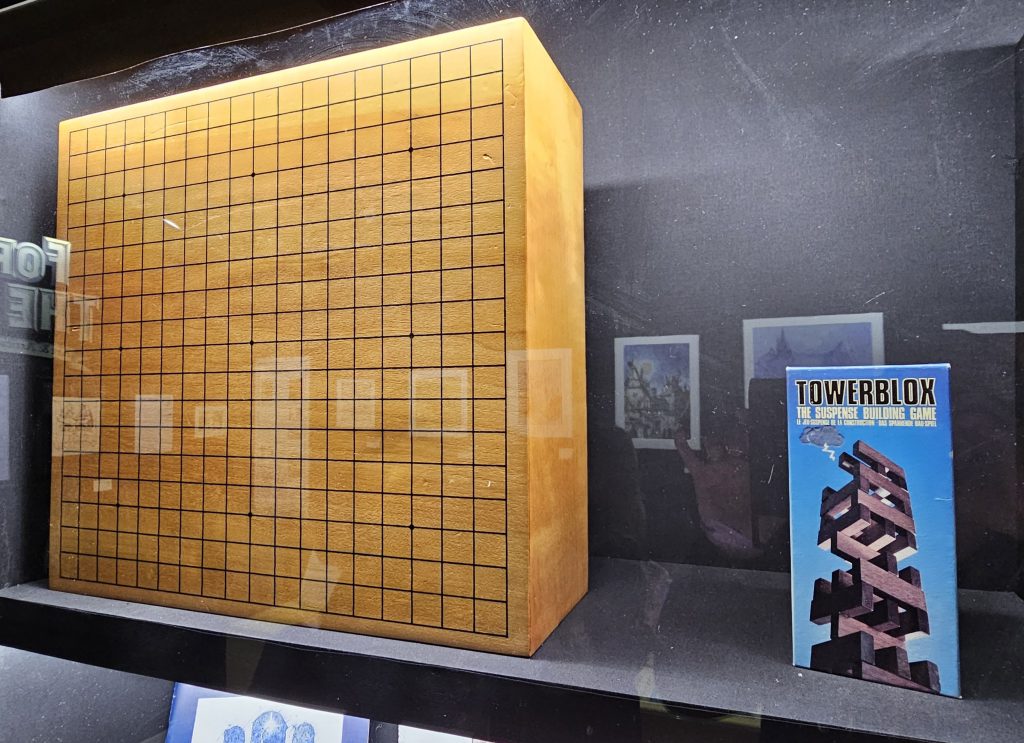
And there were some weird ones we did, which perhaps we shouldn’t, but if we’d done them well, they would have been global blockbusters. For example, Towerblox came out just before Jenga, and was pretty similar. Of course, Games Workshop was the wrong partner for such a game and it ended up in the wrong parts of the distribution channel. But I’m sure there are others.
You can’t teach creativity, and you can’t make people have a better imagination than they have, but you have to be in an atmosphere where you are inspired to be creative. I think that’s why I want schools to have much more of a creative aspect to their curriculum. I mean, Leonard Da Vinci, the world’s greatest painter, was also a mathematician and an engineer. You got to join the left side and the right side of the brain.
But as for my imagination, I read tons of comics, tons of science fiction, played tons of D&D in my youth, went travelling, went to lots of places, met lots of people – and all of these things stimulate your mind in different ways that you’re not particularly used to. And I think that’s the key, to have variety and exposure to lots of things that aren’t in your normal life.
Well, this was quite difficult for me, because these objects are irreplaceable, so whether they’re insured or not is immaterial, because if it’s gone, it’s gone, and no amount of money is going to replace that for me personally. So I sent a representative sample – I think I’ve provided 70 items for the exhibition.
I’ve supplied some art, some White Dwarf covers, early editions of White Dwarf, of course, some of the early board games and some of the very early miniatures. There are also some posters and handwritten materials and early designs. It’s a selection of some of the items I have, and I have got a lot.
The exhibition also includes a ton of art from other people who’ve provided it. So I’m very excited to see it later today, going down memory lane. And Lucca has been amazing in organising it and and I’m sure it’s going to be great. I went to Matthew Koder’s D&D exhibition here last year, and that was phenomenal.

Well, Matthew Koder has got the largest collection of Dungeon’s & Dragons art in the world by a country mile. And he’s employed Jon as the archivist to make sure this is recorded and kept and annotated in the correct way, and ultimately a museum will happen. It would be great if that were possible for Games Workshop or Fighting Fantasy. But it takes a lot of effort and a lot of resources to do that.
I’ve lent them the first edition of Owl and Weasel, which is the newsletter that started it all off for us. Very much from an emotional point of view, it’s key.

Not that I couldn’t find, some I was just too paranoid about to lend. I’ve got some pretty special pieces that didn’t make it. But what I did lend is a very good representative sample.
Really sincerely, I think Lucca Comics & Games should be congratulated for the amount of cultural significance they give to games as well as comics. The event started off as Lucca Comics and then games were added on. But I think nowhere else in the world celebrates in the cultural sense as much as Lucca does. You can see a lot of commercial exhibitions around the world, in the States, in Japan, in Europe and in the UK, of course. But here they celebrate the art and the medium and the creators, and that’s amazing.
Well, I wear several hats. Even at this age, I’m still working full time, sometimes much to the annoyance of my wife. But what else can I do? Life is a game, and work and play is the same for me.
So, in no particular order, I’ve got my school, but I don’t run that school that’s run by Aspirations Academies Trust. It’s a place that I go to quite a bit to talk to the children to try and inspire them to follow their dreams.
I’m a general partner in a venture capital fund called Hiro Capital. Obviously, I’m too old to run stuff anymore, but I like to be able to help the new kids on the block, as it were, to realise their dreams and leverage all the mistakes I’ve made in the past, and provide them with as much guidance, knowledge and advice as they want, as well as the funding.
I’m writing another Fighting Fantasy game book. I thought after the last one, never again. Talking about imagination, I’m sure mine is in decline, so it’s taking longer than ever to write something. But I enjoy the process, and I still enjoy very much working with the artists who I’ve admired over the years, who’ve helped Fighting Fantasy and Games Workshop become the forces that they were, like Iain McCaig, Karl Kopinski, who are here today in Lucca. I’m working with Karl on the new book.
I also sit on a number of not-for-profit boards, and I give lots of talks around the country and around the globe. So still, 100 per cent busy.